2028 Hyundai Crater Review, Specs, Dimensions
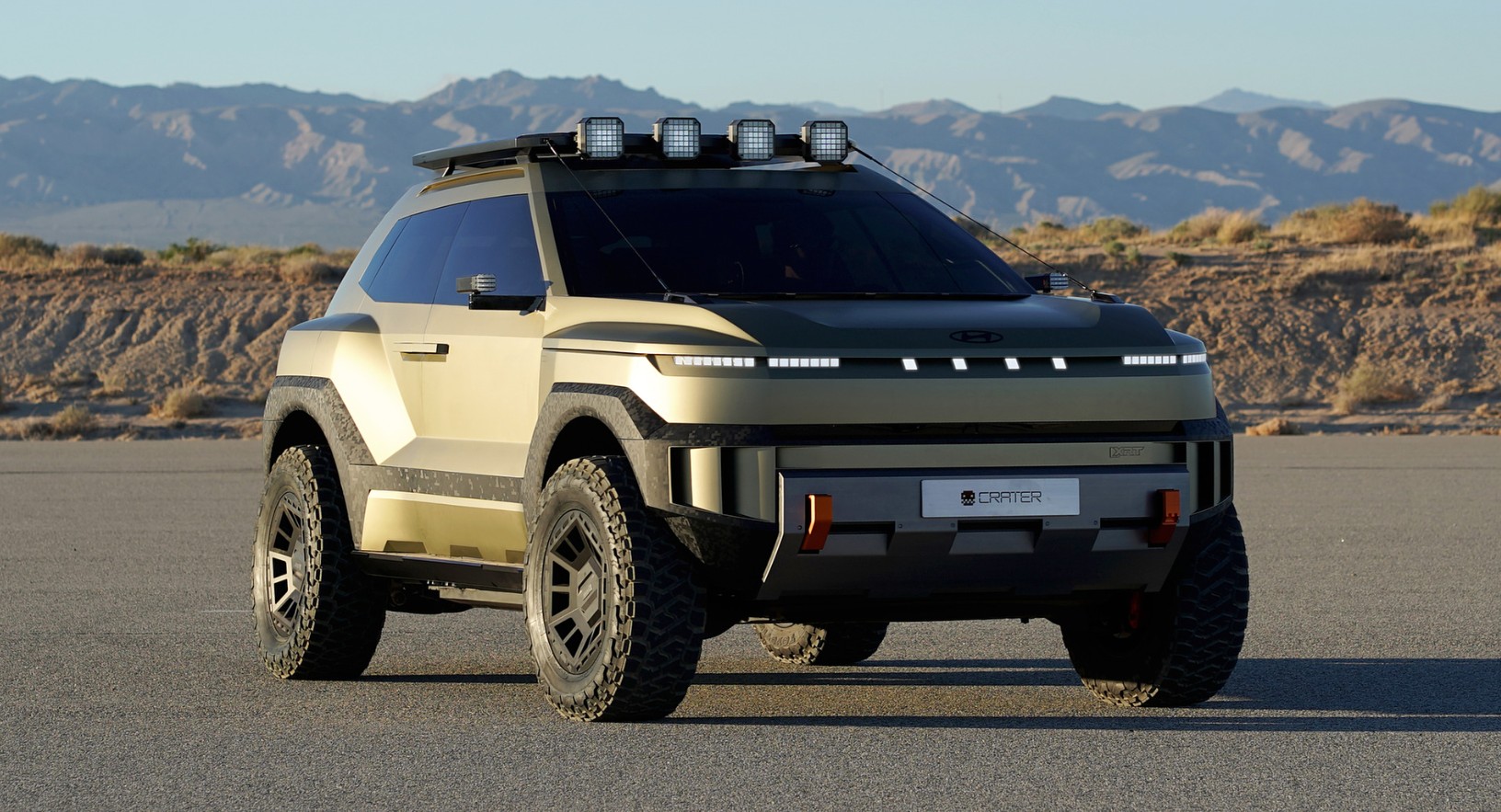
2028 Hyundai Crater Review, Specs, Dimensions – The 2028 Hyundai Crater could become one of the most distinctive additions to Hyundai’s future SUV portfolio if the bold concept evolves into a production vehicle. Hyundai revealed the Crater concept in October 2025 as an off-road-oriented design study created by Hyundai Design North America, presenting it as a compact-to-midsize adventure SUV with a deliberately rugged identity. The concept was positioned around Hyundai’s “Art of Steel” design language and was created to explore a more extreme interpretation of the brand’s future utility vehicles. (hyundainews.com)
The production status is the most important point when discussing a 2028 Hyundai Crater. Hyundai has not officially confirmed a production Crater with finalized specifications, pricing, trim levels or a release date. The concept therefore should not be treated as an already-announced 2028 model. Instead, the vehicle represents a strong indication of where Hyundai designers see potential in the adventure-SUV market. The concept’s compact dimensions, muscular proportions, protective exterior elements and sophisticated interior suggest that Hyundai is exploring an SUV positioned between everyday urban crossovers and more specialized off-road vehicles.
The Crater name itself communicates a different personality from Hyundai’s existing SUV lineup. Rather than emphasizing urban sophistication or conventional family transportation, the concept was designed around exploration. Its exterior includes prominent wheel arches, substantial underbody protection, roof-mounted equipment and large off-road tires, while the cabin is designed to feel durable and technology-focused. Hyundai describes the concept as a vehicle intended to support “modern-day explorers,” giving the project a clear lifestyle and adventure orientation. (hyundainews.com)
If a production version arrives around the 2028 model year, the Crater could become particularly important because Hyundai is simultaneously expanding its electrified vehicle portfolio. Hyundai’s broader strategy includes dedicated electric vehicles as well as hybrid models, while its concept work increasingly focuses on software, connectivity and flexible vehicle architectures. A production Crater could therefore combine a rugged exterior with electric propulsion, advanced all-wheel drive and sophisticated trail technology. That combination would put Hyundai into direct competition for buyers who want an adventure vehicle without giving up modern EV performance and technology. 2028 Hyundai Crater Review
2028 Hyundai Crater Redesign and Update Plan
Exterior & Interior
The Crater concept’s exterior is its strongest statement. Hyundai designers created a deliberately upright, muscular body with squared wheel arches, a broad stance and strong geometric surfaces. Instead of relying on decorative plastic cladding to suggest ruggedness, the concept integrates protective-looking structures into its overall design. The result is a vehicle that looks closer to an expedition machine than a conventional city crossover. A production Crater would likely soften some of the extreme details, but its proportions could remain surprisingly close to the concept.
The front end could become one of the Crater’s most recognizable elements. Hyundai has increasingly used distinctive lighting signatures to separate its electric vehicles, and the Crater concept offers an opportunity to combine that technology with a rugged face. A production version could use a closed aerodynamic front fascia rather than a conventional grille, with pixel-inspired daytime running lights and a high-mounted lighting signature. The lower bumper could incorporate a functional skid plate and recovery points, giving the vehicle a practical appearance instead of relying exclusively on visual decoration.
Side-profile design would likely retain the concept’s substantial wheel arches and tall stance. Large all-terrain tires would provide visual credibility while also improving traction on gravel, dirt and loose surfaces. The production model might use 18- or 19-inch wheels rather than the oversized wheels commonly seen on concept cars, because smaller wheels provide more tire sidewall for off-road use. Hyundai could offer different tire packages, allowing buyers to choose between highway efficiency, all-terrain capability and more aggressive mud-oriented equipment depending on their priorities.
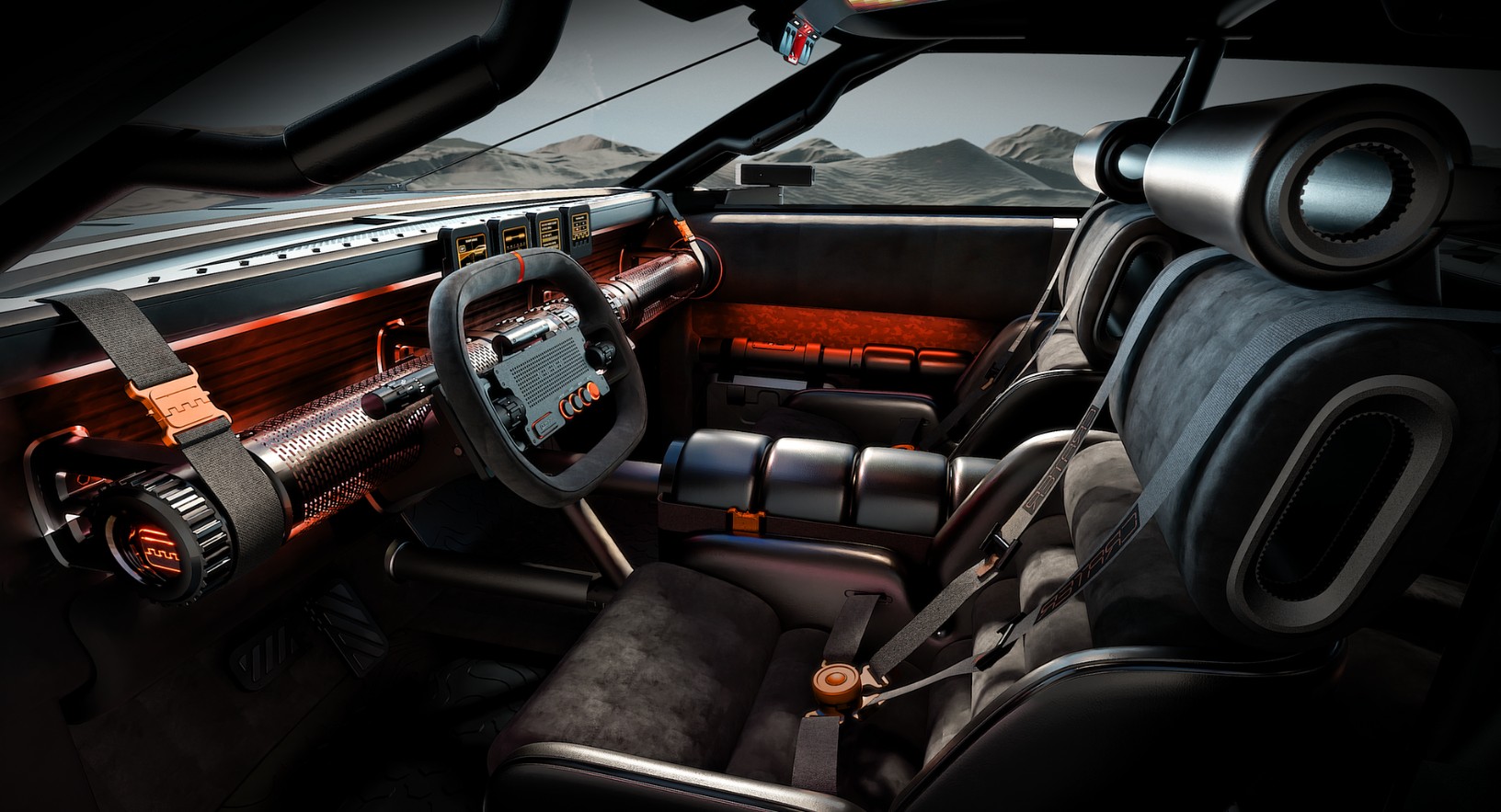
The interior could become the Crater’s most technologically interesting area. The concept was created around the idea of an adventurous cabin that remains sophisticated and connected, with durable-looking materials and a highly digital environment. A production model could feature a wide panoramic display, configurable digital instrumentation, augmented-reality navigation and a dedicated off-road information screen. Rather than making every surface glossy and delicate, Hyundai could use textured materials, durable synthetic leather, rubberized storage areas and washable flooring in the TrailSport-style equipment package.
The seating arrangement would likely remain five-passenger, giving the Crater enough room for adults while preserving cargo flexibility. A flat EV floor could provide useful second-row legroom and create additional storage opportunities beneath the front console. Folding rear seats could produce a long, nearly flat cargo floor for camping equipment, bicycles and outdoor gear. Hyundai could also integrate hidden storage compartments, tie-down points and 12-volt or USB-C power outlets throughout the cabin, making the SUV more practical for extended trips away from traditional infrastructure.
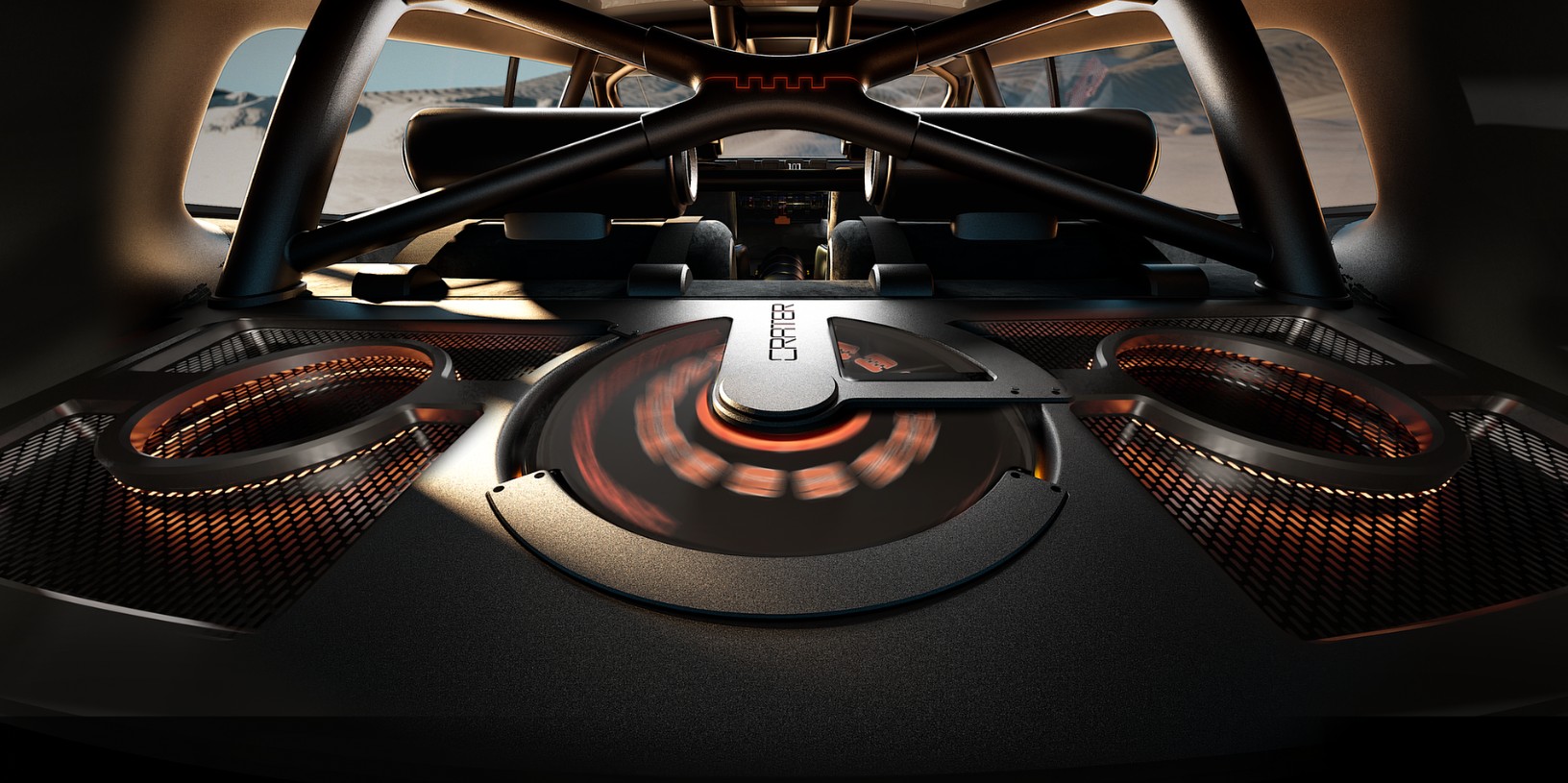
The concept’s adventurous identity could also influence the rear cargo area. A production Crater might feature a powered tailgate, underfloor storage and a configurable cargo-management system. Hyundai could potentially develop an optional vehicle-to-load system, allowing the SUV’s high-voltage battery to power camping equipment, tools, lights or other electrical devices. Such functionality is already becoming increasingly relevant to electric adventure vehicles because it turns the battery into more than a propulsion system.
The transition from concept to production would require substantial engineering changes, but the Crater’s fundamental proportions could survive the process. Concept vehicles frequently use exaggerated styling elements that are difficult or expensive to reproduce exactly, so the production model would likely receive a more practical grille treatment, conventional lighting components, revised bumpers and production-ready body panels. Even with those changes, Hyundai could retain the concept’s upright stance, squared wheel arches and high-shouldered profile to preserve its rugged identity.
The biggest engineering question concerns the platform. Hyundai has not announced a production platform or powertrain for the Crater, meaning it is premature to assign a specific EV architecture or battery capacity to the future vehicle. Hyundai’s existing E-GMP family provides one possible technical foundation, while newer modular electric architectures could also be considered depending on timing and market positioning. The production vehicle could potentially use a dual-motor all-wheel-drive system, giving Hyundai the ability to independently control front and rear torque and create dedicated terrain modes without the mechanical complexity of a traditional four-wheel-drive system.
A future production Crater would also need stronger underbody protection than an ordinary crossover. The concept was designed around an adventurous lifestyle, and its visual language strongly suggests protection from rocks, dirt and other trail hazards. A production version could therefore use aluminum or composite skid plates, reinforced rocker panels, tow or recovery points and increased ground clearance. Hyundai could also offer an accessory program with roof racks, recovery equipment, camping storage, auxiliary lighting and modular cargo systems. Such accessories would help turn the Crater from a styling statement into a complete adventure platform.
Software could become an equally important part of the redesign. A modern electric off-road vehicle can use wheel-speed sensors, cameras, inertial sensors and motor-control software to distribute torque with extreme precision. Hyundai could use those capabilities to develop Snow, Mud, Sand, Rock and Trail modes, while also providing selectable regenerative-braking settings. A dedicated trail interface could display vehicle pitch, roll, steering angle, elevation, battery temperature and remaining range. This would make the Crater feel purpose-built for exploration rather than simply being an electric crossover with rugged styling. 2028 Hyundai Crater Review
2028 Hyundai Crater Specs
Engine & Performance
The most compelling production scenario for the 2028 Hyundai Crater is an electric all-wheel-drive powertrain. Hyundai has not confirmed this configuration, but the concept’s timing and Hyundai’s expanding EV strategy make electrification a logical possibility. A dual-motor setup could provide independent torque control between the front and rear axles, allowing the software to manage traction far more quickly than a traditional mechanical system. The vehicle could also adjust torque distribution continuously rather than waiting for wheel slip to occur.
A plausible high-performance configuration could produce somewhere between 300 and 450 horsepower, depending on battery size and motor specification. A lower-output single-motor model could potentially be offered for efficiency-focused buyers, but an adventure-oriented Crater would benefit considerably from AWD. Instant electric torque would make steep climbs easier and could provide very precise throttle control at low speeds. The challenge would be ensuring that the motors and battery-management system can sustain demanding low-speed operation without overheating.
Battery capacity could potentially fall somewhere between 75 and 100 kWh in a production version. That range is speculative, but it would give Hyundai enough energy storage to target approximately 280 to 350 miles of road range depending on vehicle size, wheel selection and aerodynamic design. Off-road driving would naturally reduce that figure because of low speeds, frequent elevation changes, soft terrain and heavy use of climate control. A serious trail vehicle therefore needs not only a large battery but also intelligent energy management that provides an accurate remaining-range estimate.
Fast charging would be equally important. If Hyundai uses a modern high-voltage architecture, a future Crater could potentially support DC charging above 200 kW. The ability to recover a substantial amount of range during a short charging stop would be particularly valuable for road trips to remote trailheads. Hyundai could also optimize battery thermal management for repeated fast charging, because adventure drivers may need several charging sessions during long-distance travel. Exact charging speeds, however, cannot be stated as fact until Hyundai announces the production vehicle.
Off-road performance would ultimately depend on more than horsepower. Ground clearance, approach and departure angles, suspension travel, tire selection and traction software would determine how effectively the Crater handles difficult terrain. A dual-motor system could simulate some functions normally associated with locking differentials by reducing torque to a spinning wheel while increasing torque elsewhere. Hyundai could also develop a crawl-control-style system that maintains a very low speed automatically, allowing the driver to concentrate on steering and wheel placement.
The Crater could also become a strong towing vehicle if Hyundai engineers sufficient thermal capacity into the drivetrain. An estimated 3,500- to 5,000-pound towing target would make the SUV more useful for small campers, motorcycles and utility trailers. However, towing an electric SUV can reduce range substantially, especially at highway speeds. Hyundai would need to provide sophisticated trailer-range estimation, enhanced cooling and strong regenerative-braking management to make towing genuinely practical rather than merely possible.
2028 Hyundai Crater Fuel Economy
Fuel economy would be one of the Crater’s major advantages if Hyundai successfully keeps its weight under control. An electric powertrain eliminates the traditional gasoline engine’s inefficiency during low-load operation and can recover energy through regenerative braking. A production model targeting approximately 280 to 350 miles of EPA range could potentially deliver competitive MPGe figures. Actual efficiency would depend heavily on weight, tire selection, aerodynamics, battery chemistry and motor efficiency, so specific 2028 EPA ratings should not be assumed before the vehicle enters production.
The biggest efficiency challenge would be the rugged equipment itself. Larger tires, increased ride height, skid plates and roof accessories can increase aerodynamic drag and rolling resistance. Adventure buyers may accept some range loss in exchange for capability, but Hyundai would still have strong incentives to optimize the vehicle. Lightweight body panels, efficient heat-pump climate control, aerodynamic wheel designs and intelligent regenerative braking could help preserve range without compromising the Crater’s personality.
Battery protection would also be crucial. Unlike a normal urban EV, an off-road Crater could encounter rocks, deep ruts and water crossings. The battery enclosure would therefore need strong structural protection and sealing. A raised battery floor, reinforced shield and carefully designed cooling system could protect the most expensive component beneath the vehicle. If Hyundai gets that engineering right, the Crater could demonstrate that EVs can be designed for genuine outdoor use rather than simply being styled to look adventurous.
2028 Hyundai Crater Safety Features
Safety should be one of the Crater’s strongest technical attributes. Hyundai has already developed a broad suite of driver-assistance systems across its modern vehicle range, and a premium electric adventure SUV would be expected to receive the latest version of those technologies. A production Crater could include forward collision avoidance, pedestrian and cyclist detection, lane-keeping assistance, blind-spot monitoring, rear cross-traffic alert, adaptive cruise control and driver attention monitoring.
The vehicle’s camera and sensor suite could also provide significant benefits off-road. Surround-view cameras could display a virtual top-down view, while dedicated trail cameras could help the driver see obstacles directly in front of the tires. Hyundai could potentially integrate a front-facing low-mounted camera that automatically activates in Trail or Rock mode. Such a system would be particularly useful when the hood blocks visibility over steep approaches, allowing the driver to position the wheels more accurately.
A production Crater could also offer advanced highway assistance. Hyundai’s Highway Driving Assist technology has already demonstrated the company’s approach to combining adaptive cruise control with lane-centering assistance. A future Crater could potentially feature an updated system with smoother lane changes, improved traffic recognition and more sophisticated navigation integration. However, the system would remain a driver-assistance feature rather than an autonomous driving substitute, particularly when operating on rough or unstructured terrain. 2028 Hyundai Crater Review
2028 Hyundai Crater Release Date & Price
A production release around 2028 would be consistent with the concept’s role as a future design exploration, but Hyundai has not confirmed that timeline. The concept was revealed in 2025, and a production vehicle would require extensive validation, engineering development and regulatory certification before reaching dealerships. If Hyundai approves the project, a late-2027 reveal followed by 2028 sales would be a plausible industry timeline, but it remains speculative.
The final production name could also change. Hyundai may retain “Crater” if market research indicates that the name works internationally, or the concept could become part of an existing SUV family. The company could also use a familiar designation followed by an XRT or TrailSport-style badge. For SEO purposes, the “2028 Hyundai Crater” name is currently the most direct way to describe the concept’s potential production future, but buyers should wait for Hyundai to announce the official vehicle identity.
If Hyundai proceeds, the Crater would likely be positioned as a more rugged counterpart to the brand’s mainstream electric crossovers. Its closest competition could include electric adventure SUVs from Rivian, Subaru, Jeep, Ford and other manufacturers, depending on launch timing and specifications. Hyundai would have an opportunity to differentiate itself through pricing, fast-charging technology, interior design and a more accessible approach to off-road EV ownership.
Because the Crater remains a concept rather than a confirmed production model, Hyundai has not announced an official trim structure. If the company moves forward with production, a three-tier lineup would make sense. A base Crater could focus on range and everyday usability, while a mid-level AWD version could add stronger motors, all-terrain tires and enhanced trail technology. A range-topping Trail or XRT-style version could then receive the full suspension, tire, skid-plate and recovery-equipment package.
A plausible entry point could be around $45,000–$50,000, positioning the Crater above mainstream compact EVs but below luxury electric SUVs. An AWD version could land around $52,000–$58,000, while a fully equipped off-road flagship could reach $60,000–$68,000 before destination charges and options. These figures are purely projections and should not be interpreted as Hyundai pricing. The final MSRP would depend heavily on battery capacity, platform selection, production location and the level of standard equipment.
Conclusion
The 2028 Hyundai Crater is still an unconfirmed production vehicle, but the concept presents a clear direction for Hyundai’s future adventure-SUV ambitions. Its rugged proportions, protective bodywork, advanced digital interior and outdoor-focused design make it considerably more distinctive than another conventional electric crossover. If Hyundai converts the concept into a production model, retaining the basic visual attitude while adding practical engineering could give the company a compelling new product category.
The strongest production formula would combine dual-motor AWD, a substantial battery, genuine ground clearance, durable underbody protection and sophisticated terrain software. Electric propulsion could actually benefit the Crater’s trail capability by providing instant torque and precise wheel-by-wheel control. The challenge would be balancing that capability with weight, battery cooling, charging speed and real-world range. Those engineering decisions will determine whether the Crater is simply an attractive lifestyle EV or a genuinely useful adventure machine.
Pricing could also determine its impact. A starting point below $50,000 would put the Crater within reach of buyers who want something more distinctive than a conventional compact EV, while a $60,000-plus flagship could compete directly with premium adventure-oriented electric SUVs. Hyundai has an opportunity to create multiple versions rather than forcing every buyer to pay for maximum off-road hardware. A range-focused model could serve commuters, while an XRT-style flagship could target campers, overlanders and serious outdoor enthusiasts.
For now, the most accurate outlook is that the 2028 Hyundai Crater remains a possibility rather than a confirmed production model. Hyundai has not announced final powertrain specifications, battery capacity, EPA range, trims, MSRP or release date. Nevertheless, the concept demonstrates enough design and product ambition to make a production interpretation worth watching. If Hyundai combines the Crater’s bold styling with proven EV technology, intelligent AWD, fast charging and authentic trail equipment, the resulting SUV could give the brand a distinctive entry into the rapidly expanding market for electric adventure vehicles.